I'm Rohit, an independent product designer for ambitious, early-stage B2B and B2C teams building something new. I've designed products for YC-backed teams across fintech, compliance, data analytics and consumer apps.
Design tools bring the craft, AI brings range and speed, and every decision stays human.
01
Understand the problem first
Before any screens, I study how the work happens today: interviewing the people who use the product, reviewing support tickets and analytics, and using AI to synthesize what I find and surface patterns that are easy to miss.

02
Prototype early
Working in design tools and AI together, I turn ideas into clickable flows quickly, so the team reacts to something concrete instead of a static screen or a description.
03
Test with real users
I observe where users hesitate and which workarounds they create, and use AI to analyze sessions and feedback at scale. The judgment about what to change stays with me.
04
Hand off build-ready designs
Every edge case is resolved and documented, with tokens and components engineers can build from directly, without needing clarification.
AI changes how much we can explore, not who is accountable for the result. I use it to test more ideas and cover more ground, and I stay with the project through the difficult middle to make sure what ships is right.
Engage
Ways to work together
I work with two clients at a time, three at most, so every team gets consistent weekly attention.
01
Product sprint (2–3 weeks)
One hard problem, taken from an unclear idea to a clickable, testable flow your team can react to.
2–3 weeks
Paid upfront
02
Ongoing design partnership
Design and development running together week after week, with design tokens and components rather than a folder of static files.
30 days' notice
Billed monthly in advance
03
Scoped 0→1 project
From early idea to a design your engineers can build from. Quoted upfront, so if the work takes longer, that risk is mine.
Fixed price
Paid 40 / 30 / 30
Still got questions?
Frequently asked questions
What do you work on?
I design products and the brand identity around them, for B2B and B2C teams.
I add the most value when the direction of the product is still being
defined.
How do you use AI in your work?
AI is part of my process, not an add-on. I use it alongside design tools for
research synthesis, exploring directions, prototyping and documentation, and
I review everything myself. The result is broader exploration and faster
iteration, with accountability for the final design staying with me.
How many clients do you take at a time?
I work with a maximum of three clients at once, and usually two. That limit
is what allows me to keep a consistent weekly cadence with each team.
Which time zones do you work with?
I work with teams in US and European time zones and schedule calls to overlap
with your working day.
Do you work with our engineers?
Yes. Design and development run in parallel, so what ships matches what was
designed. You receive design tokens and production-ready components rather
than a folder of static files.
Can I pause or cancel?
Ongoing partnerships can be paused or ended with 30 days' notice. Fixed-scope
projects are quoted upfront, and the price does not change if the work takes
longer than estimated. That risk is mine.
Do you do research?
Yes, before any design begins. I speak with your users and review whatever
analytics already exist. These conversations often show that the underlying
problem differs from the one I was originally brought in to solve.
How does payment work?
Sprints are paid upfront. Fixed-scope projects are billed 40 / 30 / 30 across
the project milestones, and ongoing partnerships are billed monthly in
advance. Payment is by bank transfer, to either a US or an Indian account,
whichever is more convenient for you.
AI fraud agents for banks (YC25), designed to work within the review queue investigators already trust.
YC25
Product design
AI
Enterprise
Problem 01
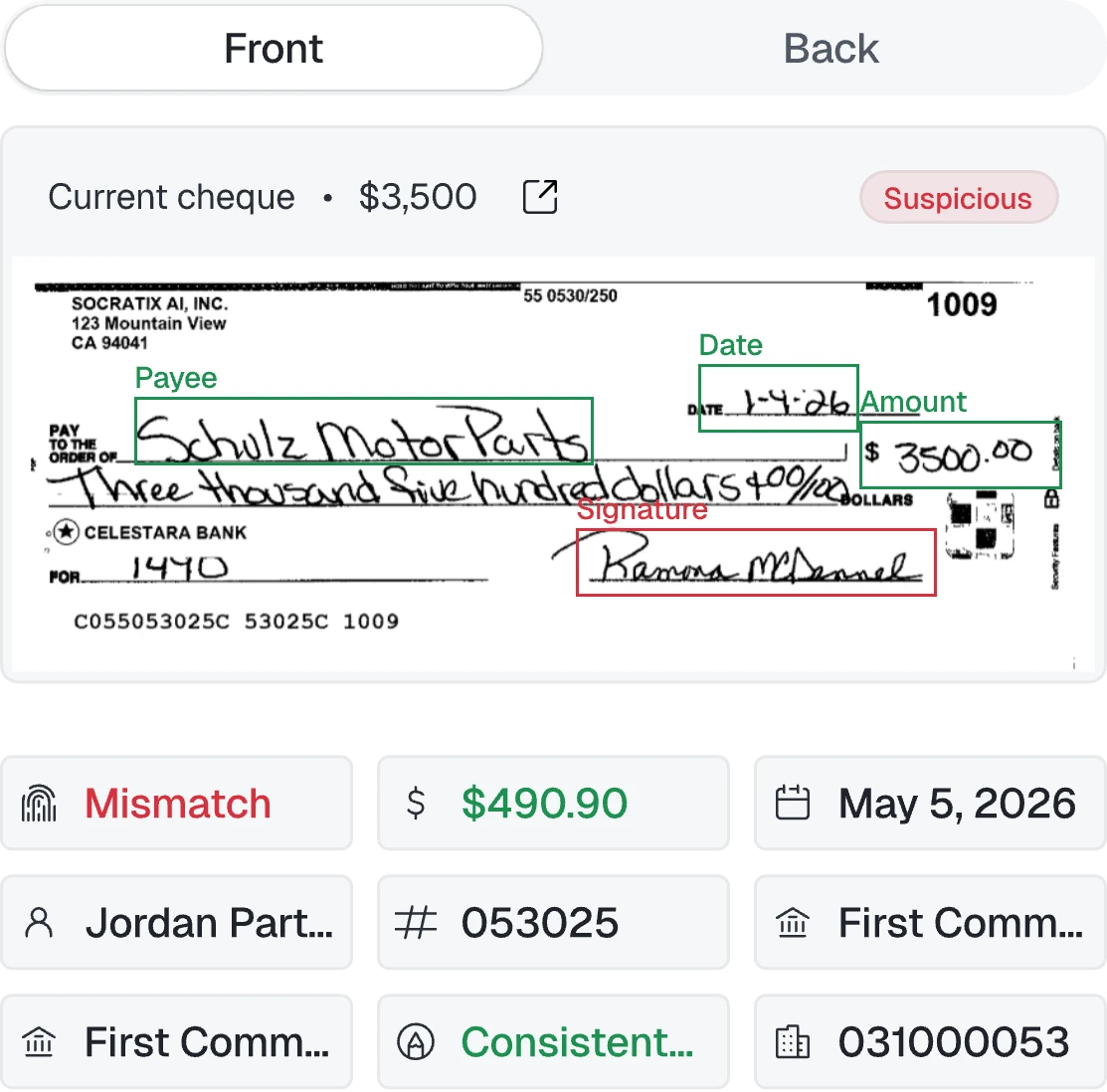
An agent marking a cheque "suspicious" is only useful if the
investigator can see why, and check it for themselves in a few seconds.
A dummy cheque made up for this case study — not a real one.
The evidence, marked on the cheque
Every field the agent reads is boxed right where it found it on the
cheque: green when it matches what that account normally looks like, red
when it doesn't. Below it, each extracted value sits in its own chip —
signature, amount, date, payee, cheque number, bank and routing number —
so the one mismatch stands out at a glance, with the back of the cheque
one tap away.
Problem 02
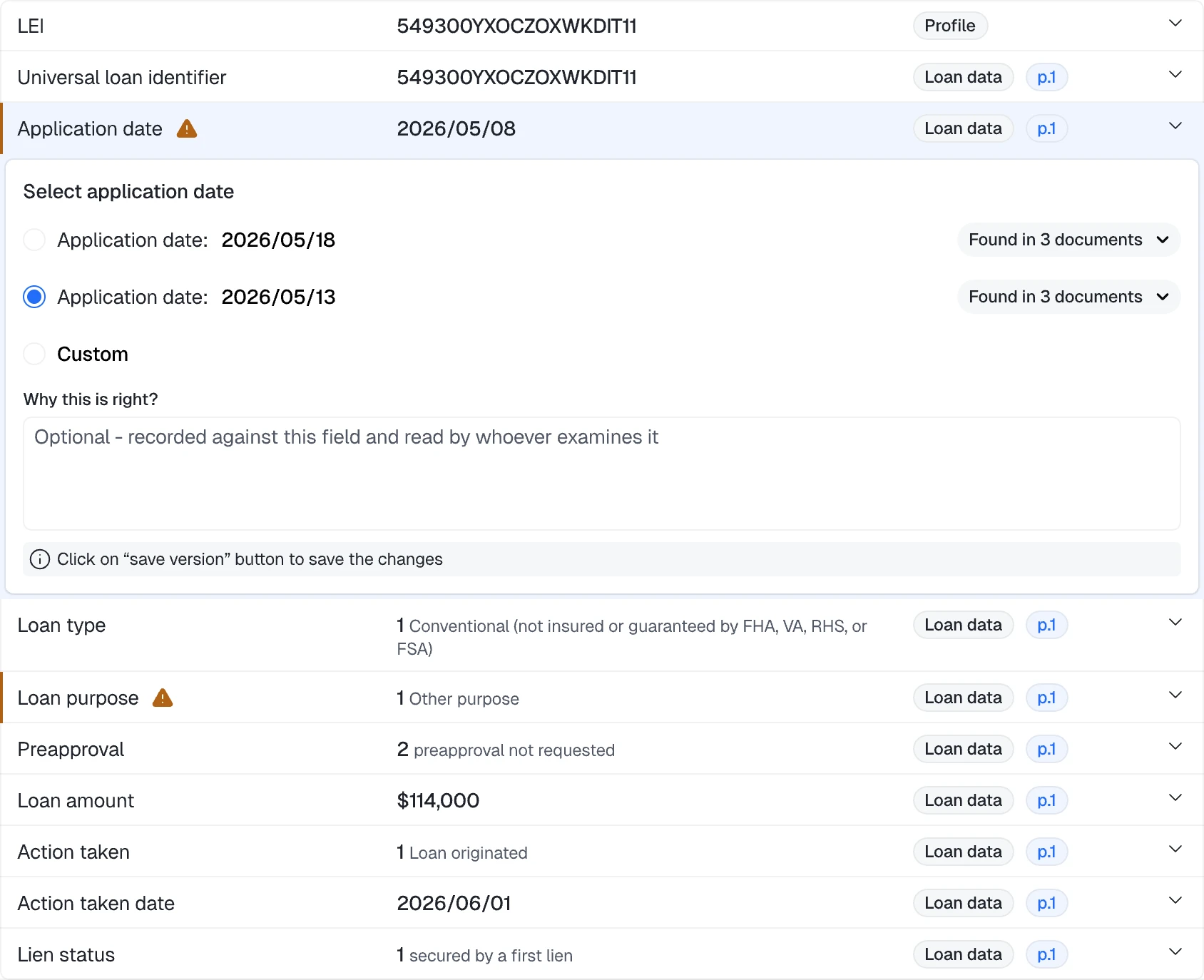
A loan filing pulls the same field from several documents, and they
don't always agree. Quietly picking one value is exactly how a reporting
error slips through.
Every conflict resolved on the record
Each field on the loan record shows where its value came from — the
profile or the loan data — and which page. A field with conflicting
values is flagged in place. Open it, and every candidate value is listed
with how many documents it was found in, alongside a custom option and
a note on why the chosen one is right, saved as a version for whoever
examines the filing next.
Problem 03
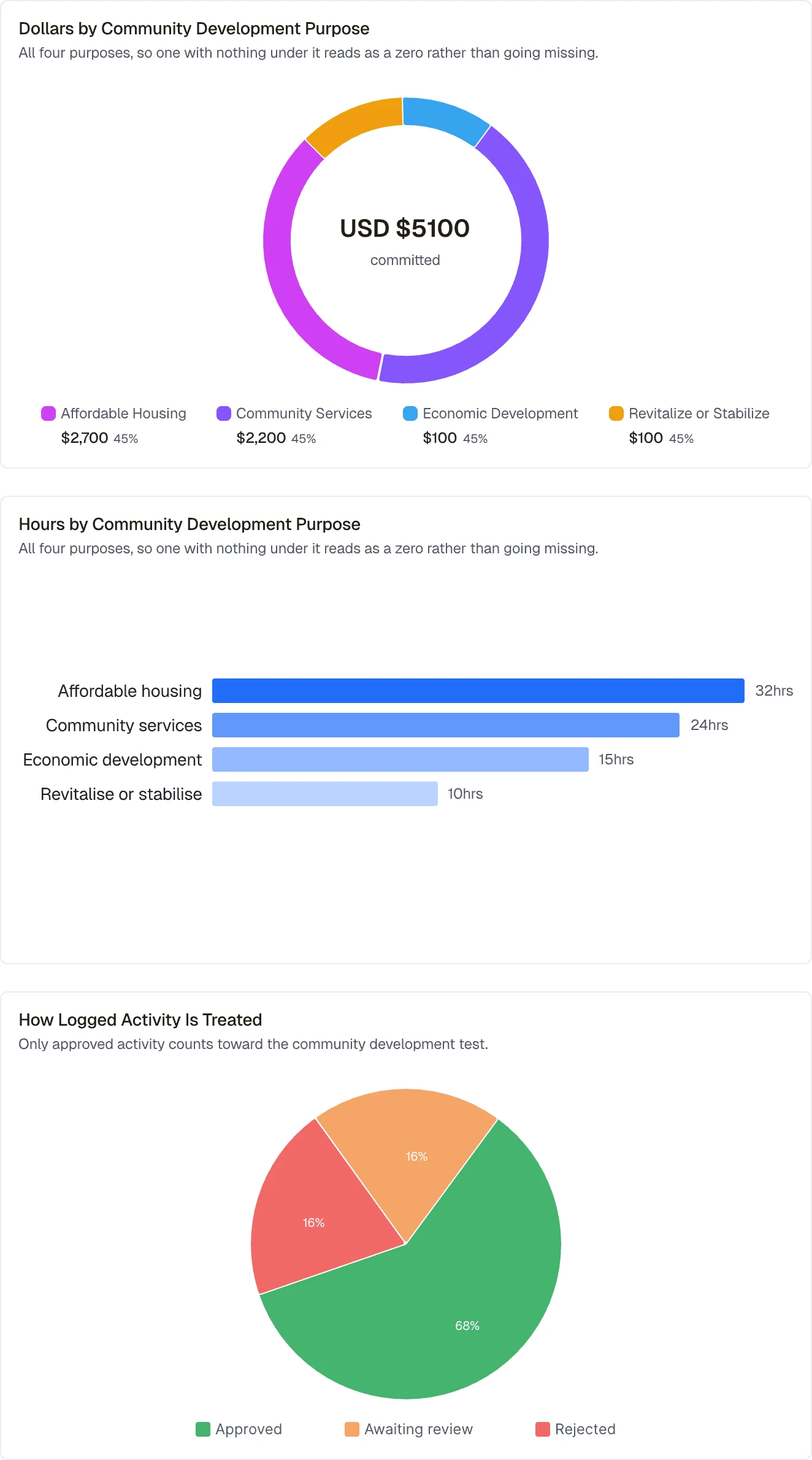
Community development activity is reported by purpose. A purpose with
nothing logged under it shouldn't quietly drop off the chart — that
reads as missing, not zero.
Zeros shown, not hidden
Dollars and hours are both broken down by the same four purposes, and
all four always stay on the chart, even at zero. A third chart splits
logged activity into approved, awaiting review and rejected, because
only approved activity counts toward the community development test.
Outcome
Socratix builds fraud agents for banks, coming out of YC25 — designed to
fit into a review queue investigators already trust, instead of asking
them to trust something new.
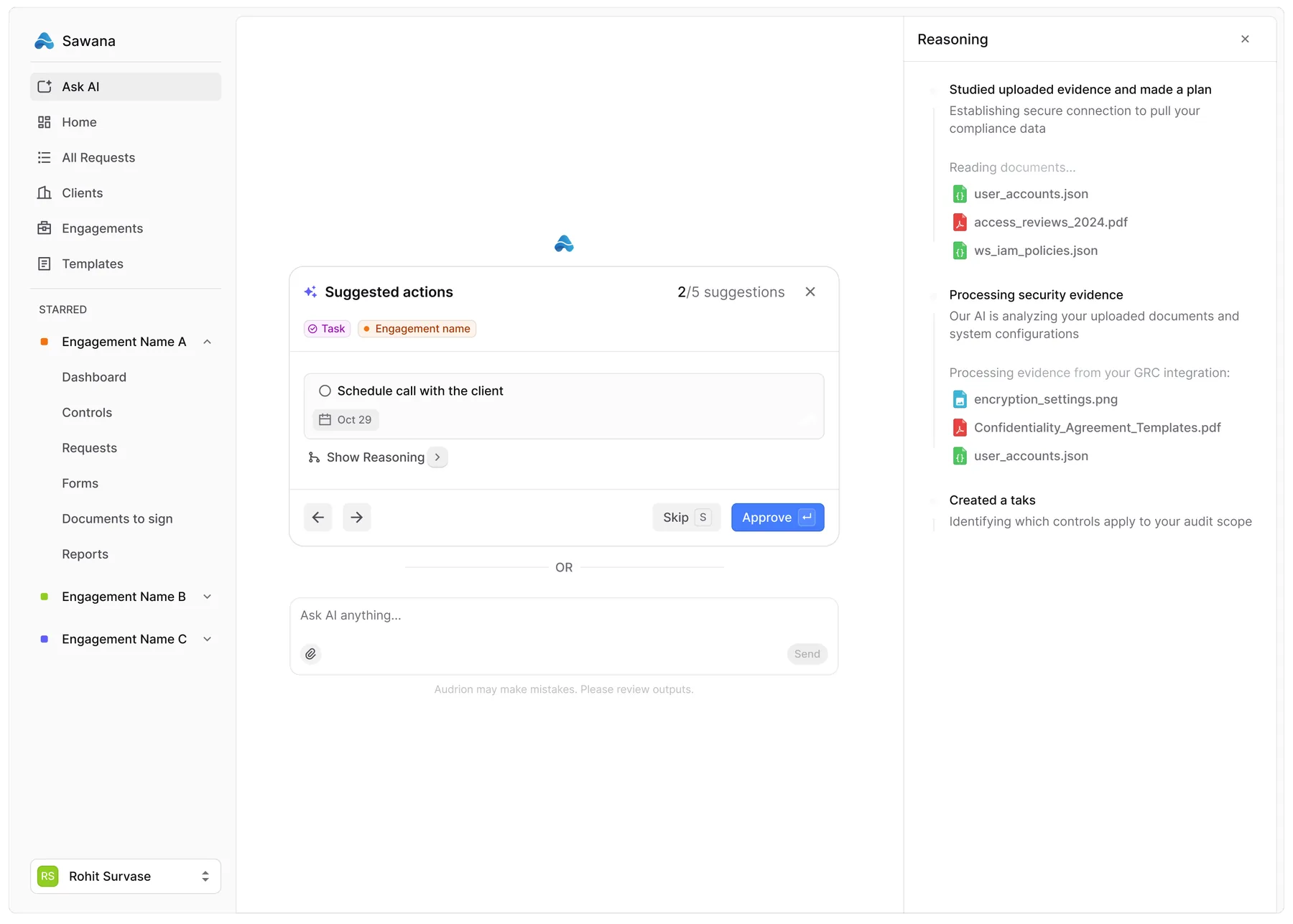
One way in was a general AI assistant you could open from anywhere. The
other lived inside each control, tied to a specific test. Both produced
suggestions, but neither knew the other existed — the same request could
land two different answers depending on which one you used.
Local authority for the control-level agent
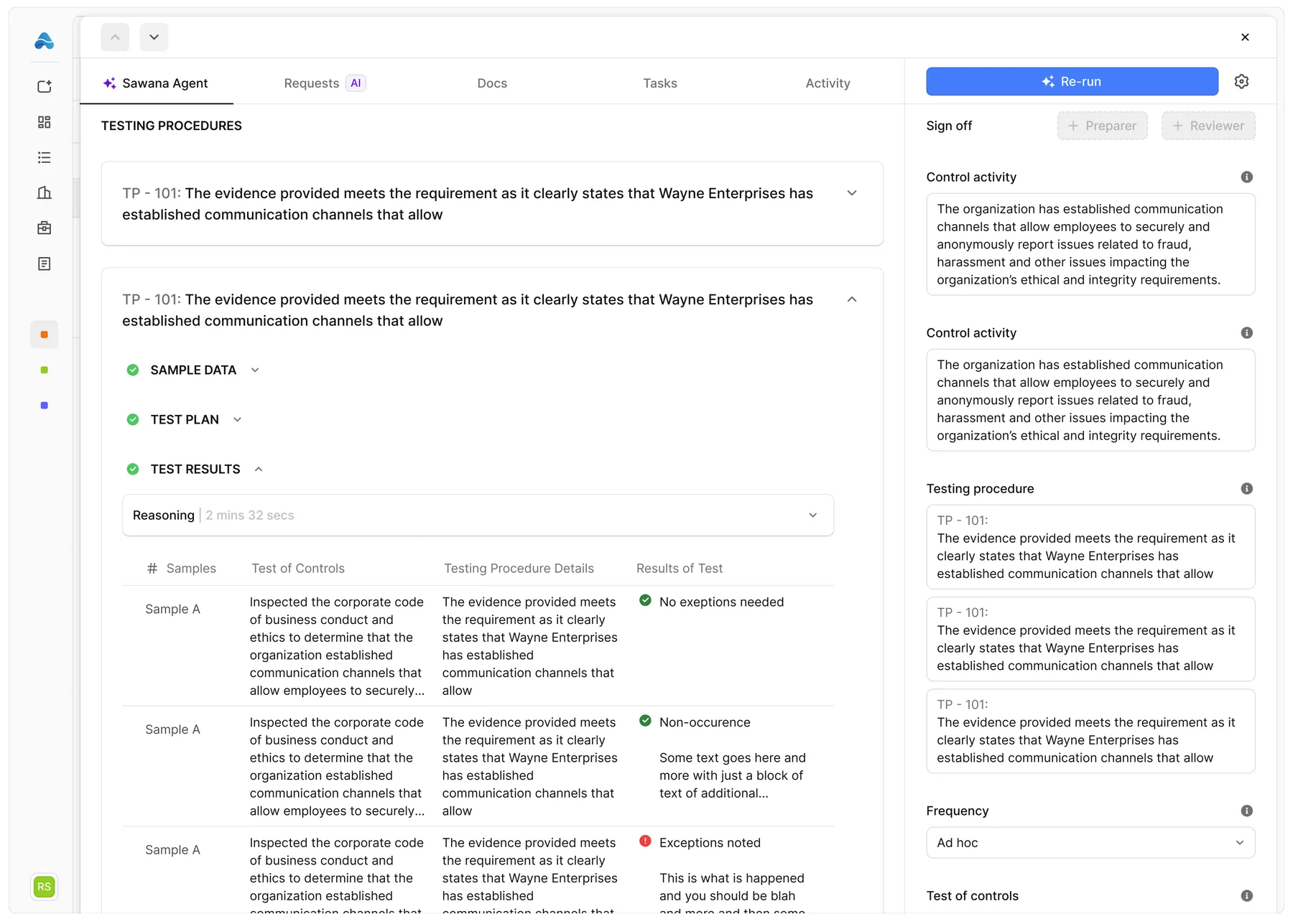
Gave the control-level agent local authority. The general assistant
stayed for open, cross-control questions — suggesting one action at a
time to approve or skip, with its reasoning open alongside: the evidence
it studied and the plan it made. Anything about one specific control now
opens inside that control's own panel, next to the samples and test plan
it's reasoning about.
Problem 02
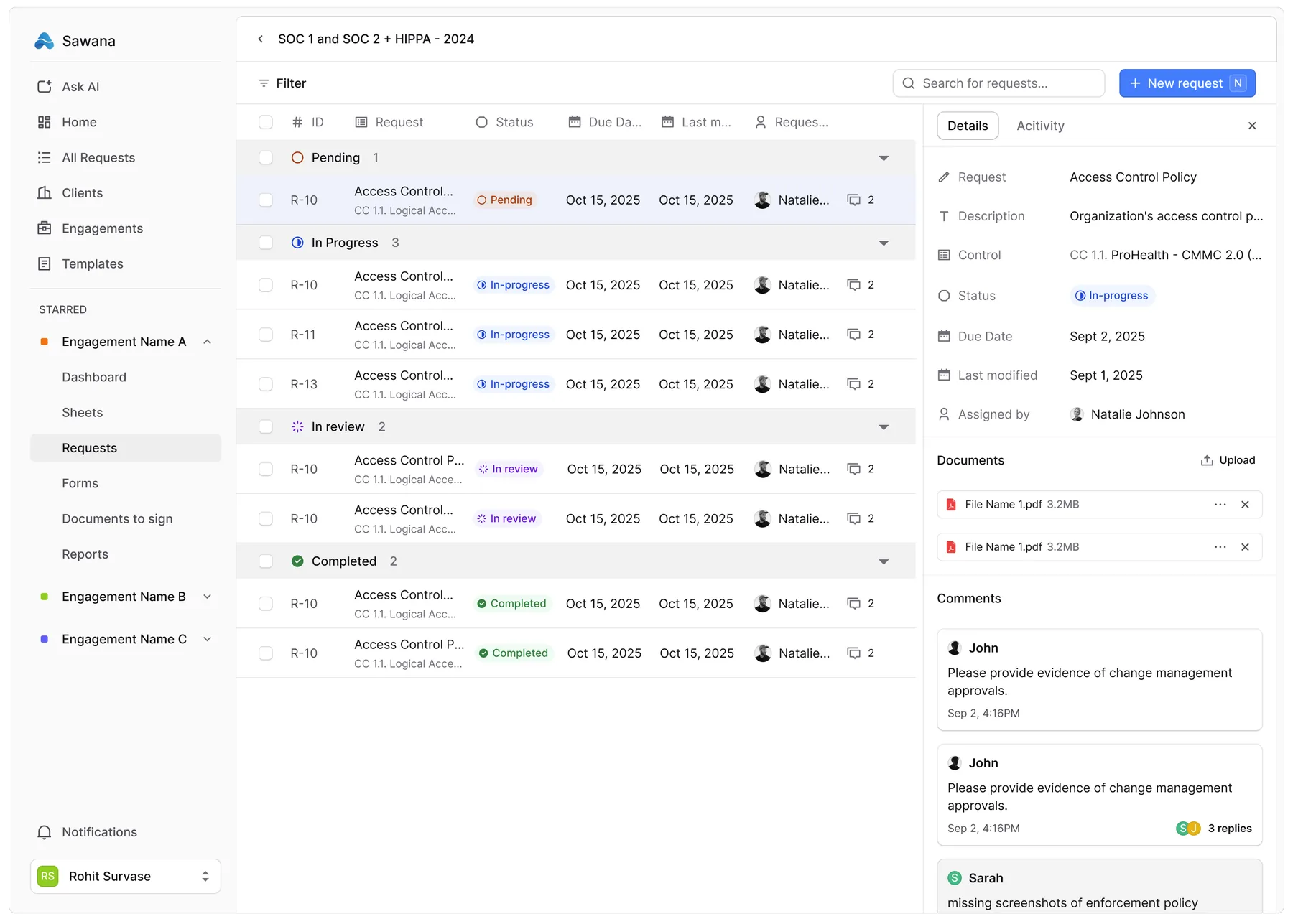
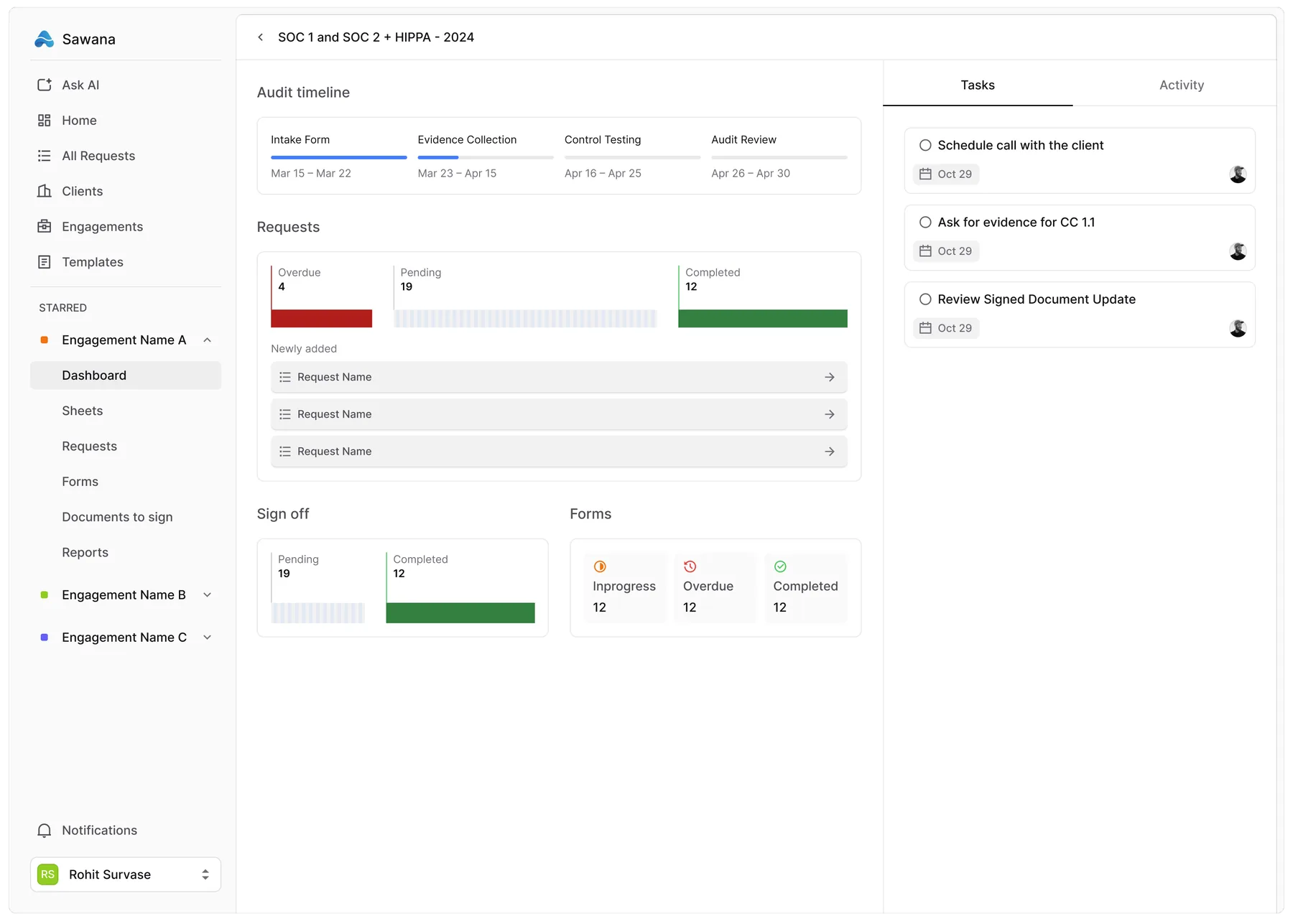
Once agents were running across dozens of controls, a flat status like
"in progress" could mean five different things depending on who you
asked — running with the agent, waiting on a person, in review, or
already signed off.
Four explicit states, always
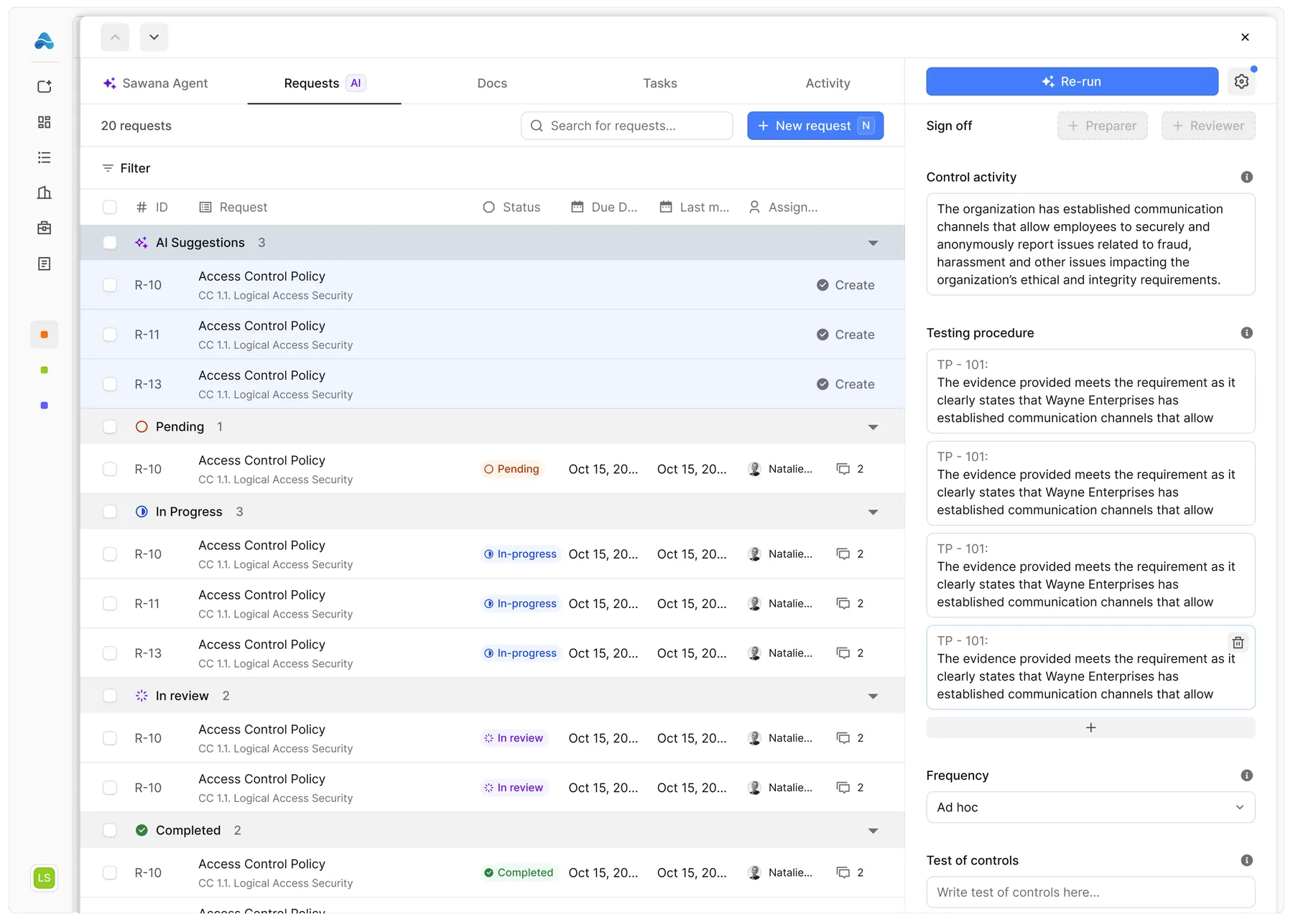
Gave every request exactly one of four explicit states — pending, in
progress, in review, completed — and grouped the queue by them. A
reviewer can filter straight to their own queue. On the controls sheet,
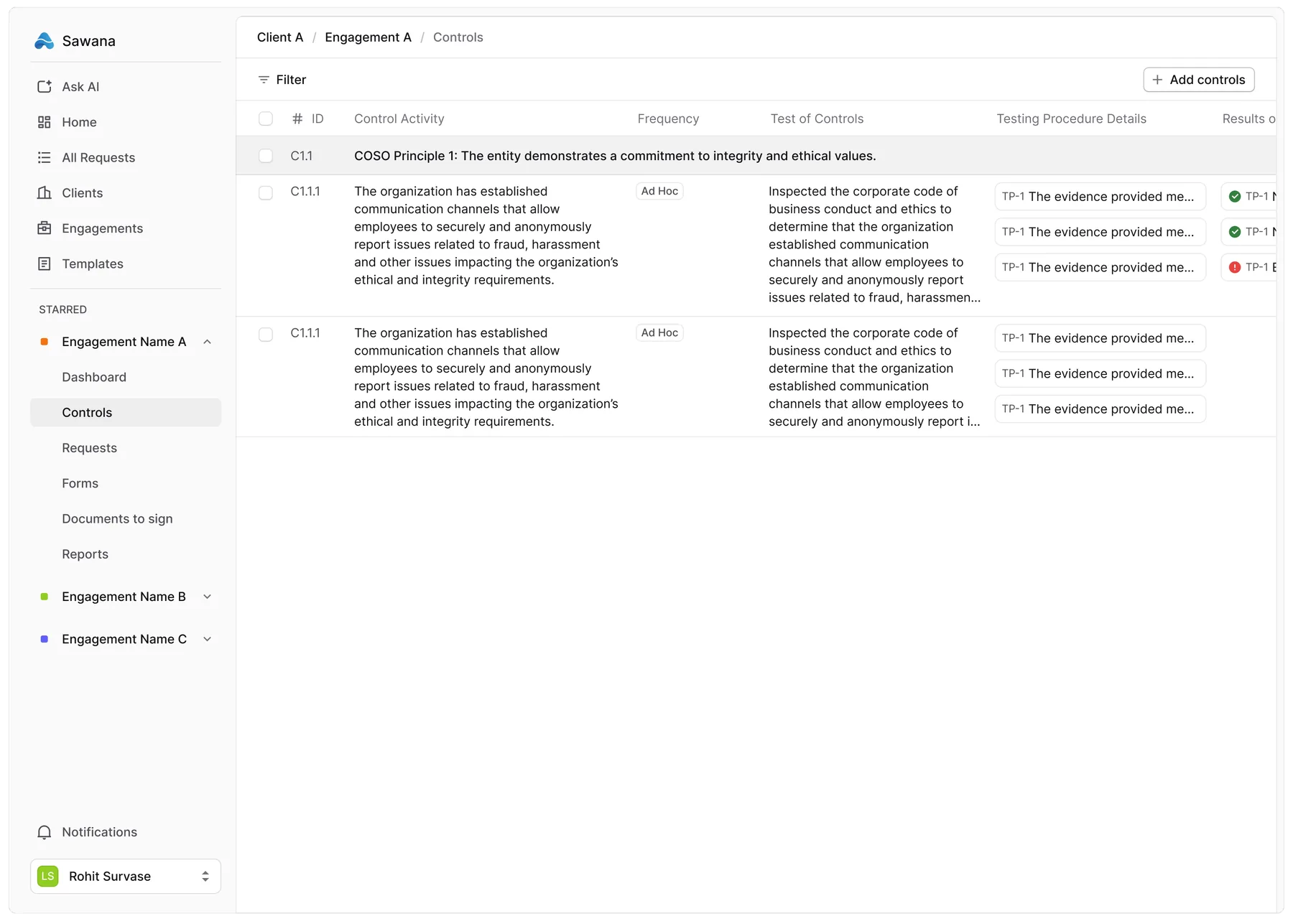
each control sits against the principle it tests, with its results right
there in the row.
Problem 03
A control's status showed up as a progress bar on the dashboard, a tag
in the request queue, and a sign-off panel inside the control itself —
three different visual languages for the same fact.
The same four states, everywhere
Kept the same four states recognizable everywhere — same colors, same
language — so "waiting on a person" means the same thing no matter which
screen you're on.
Problem 04
A preparer's approval and a reviewer's sign-off sat side by side, same
size, same weight — exactly the setup that gets someone to sign off on
work they were only supposed to draft.
One primary button, one secondary
Split them visually — one primary, one secondary — so which hat you were
wearing was obvious before you clicked.
Outcome
Audrion shipped start to handover in eight weeks. The company was later
acquired by Opendoor.
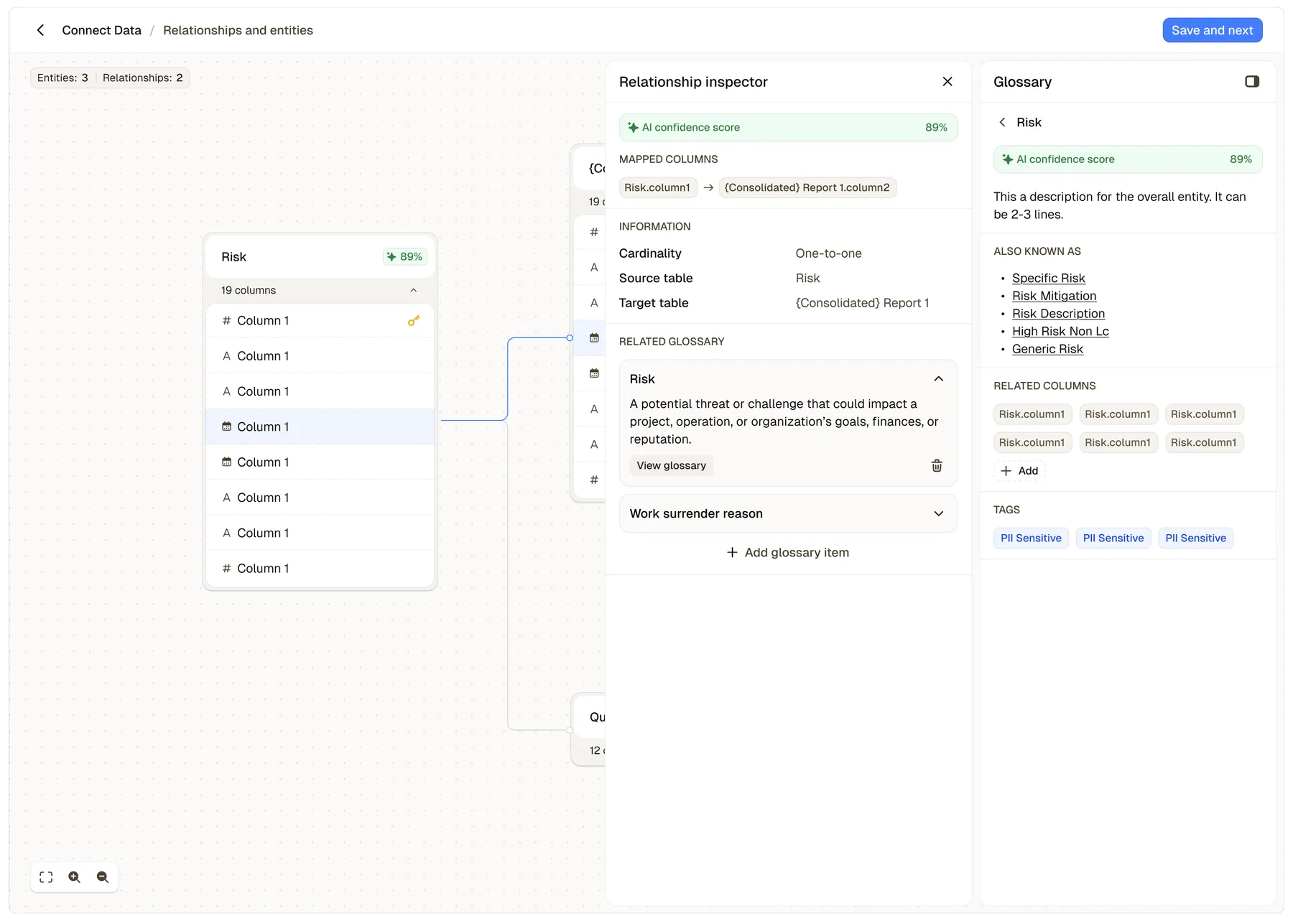
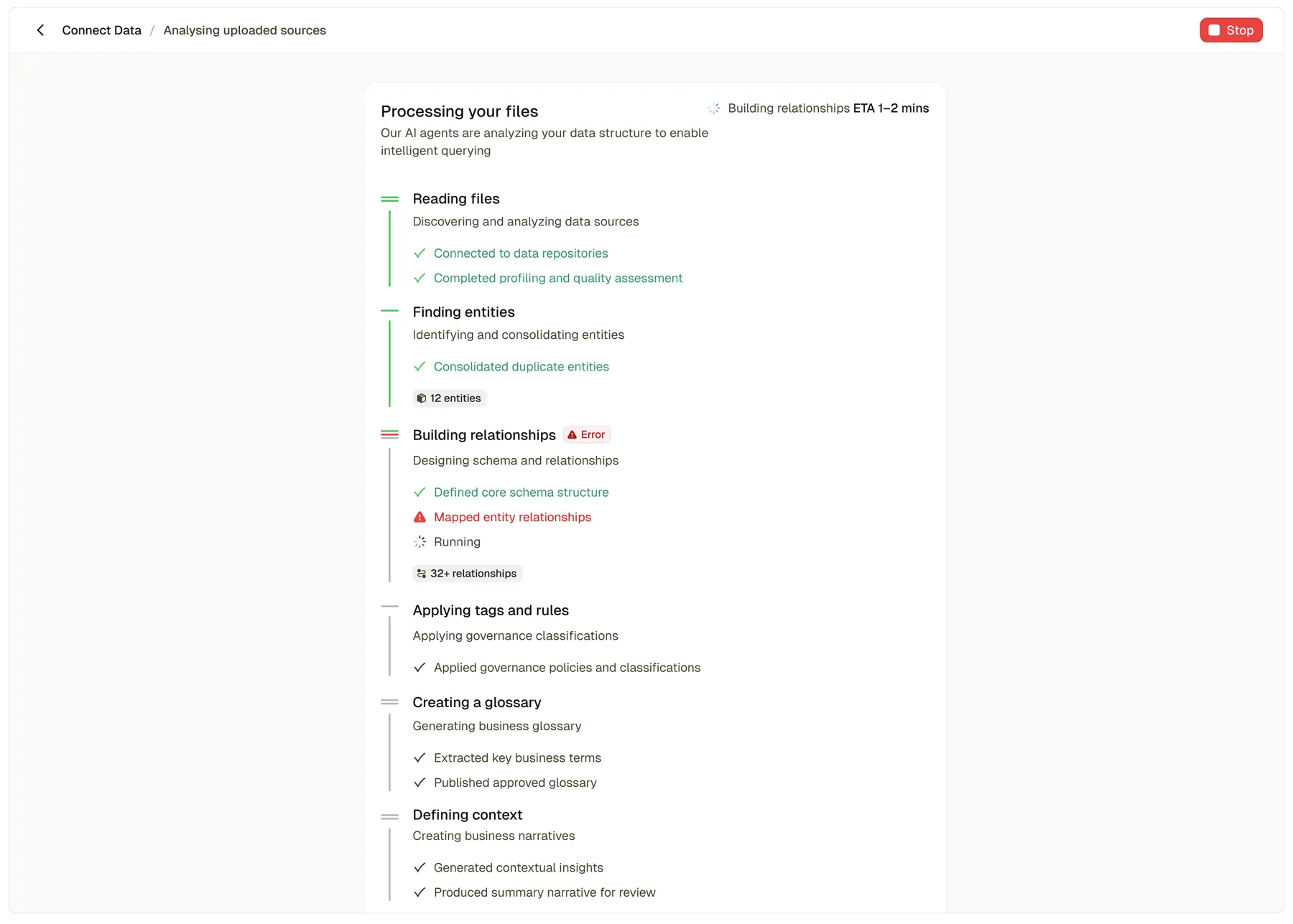
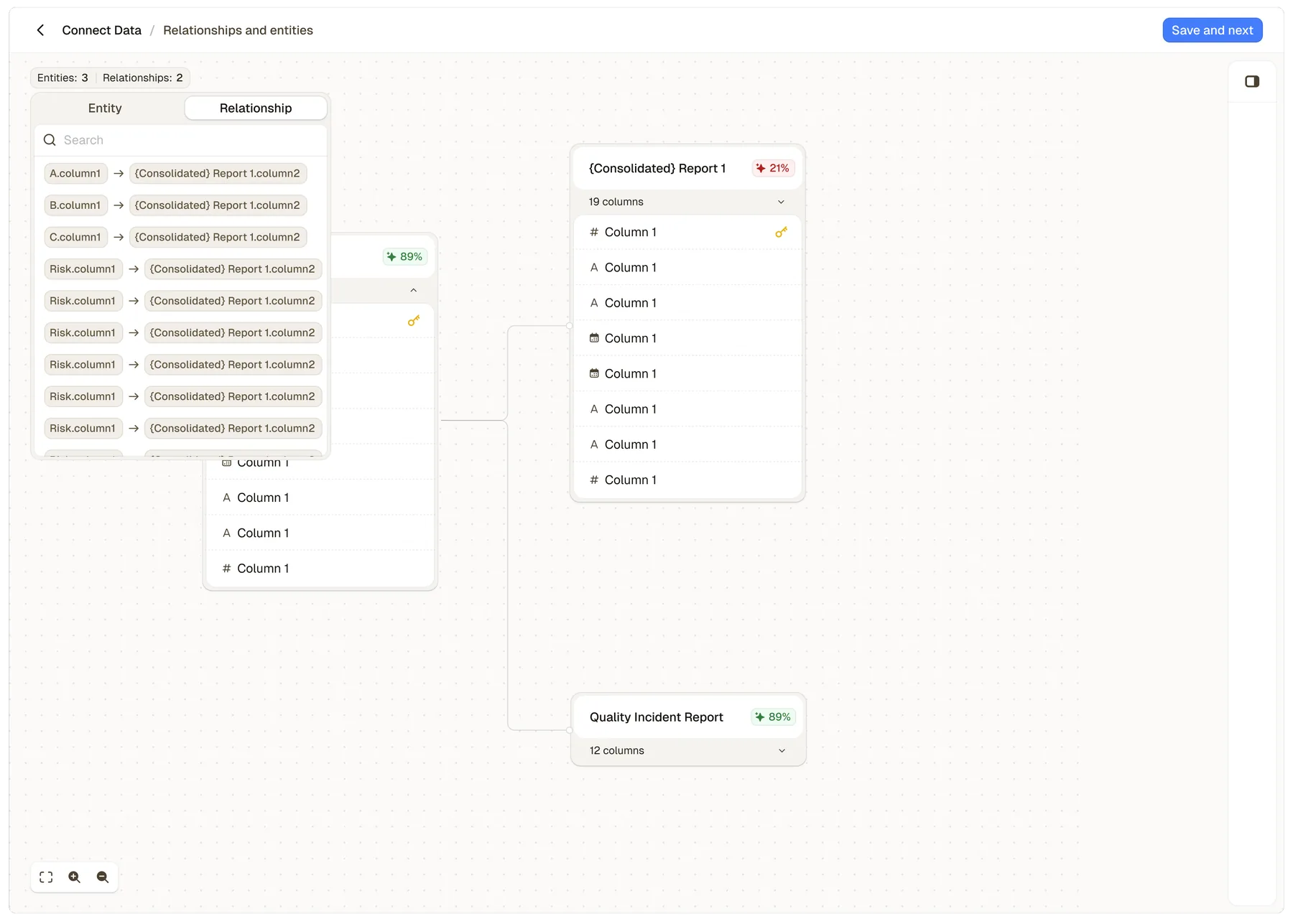
Mapping relationships between entities is a judgment call — two columns
that look alike but mean different things. Buried inside a progress bar,
a bad guess there would flow silently into every report built on top of
it.
A confidence score on every entity
Every entity the pipeline finds now carries its own confidence score,
right on the card — low enough, and it's plainly asking to be checked
before anyone builds an analysis on top of it.
Problem 02
A low number tells you to look. It doesn't tell you what you're looking
at, or whether someone already decided this one was fine.
Full context behind every low-confidence relationship
Opened a low-confidence relationship straight into what it's claiming
and what it's called elsewhere — cardinality, source and target table, a
linked glossary entry, and a tag for anything sensitive.
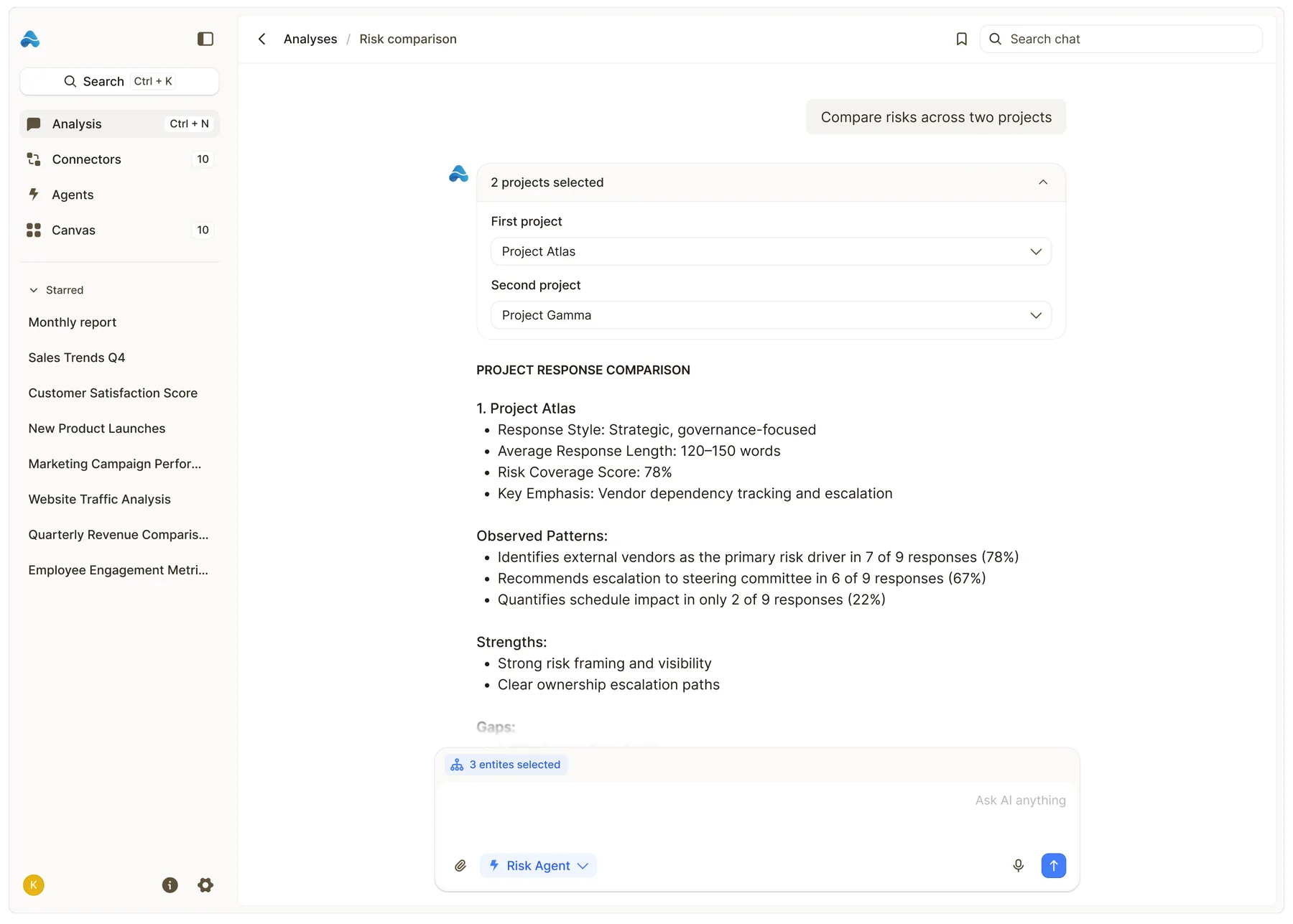
Problem 03
A single "ask anything" box has to guess what you actually mean —
scoped to which data, answered by which logic.
Scoped questions, named agents
Let people scope a question to specific entities and hand it to a named
agent built for that kind of question, instead of hoping one general
assistant gets it right.
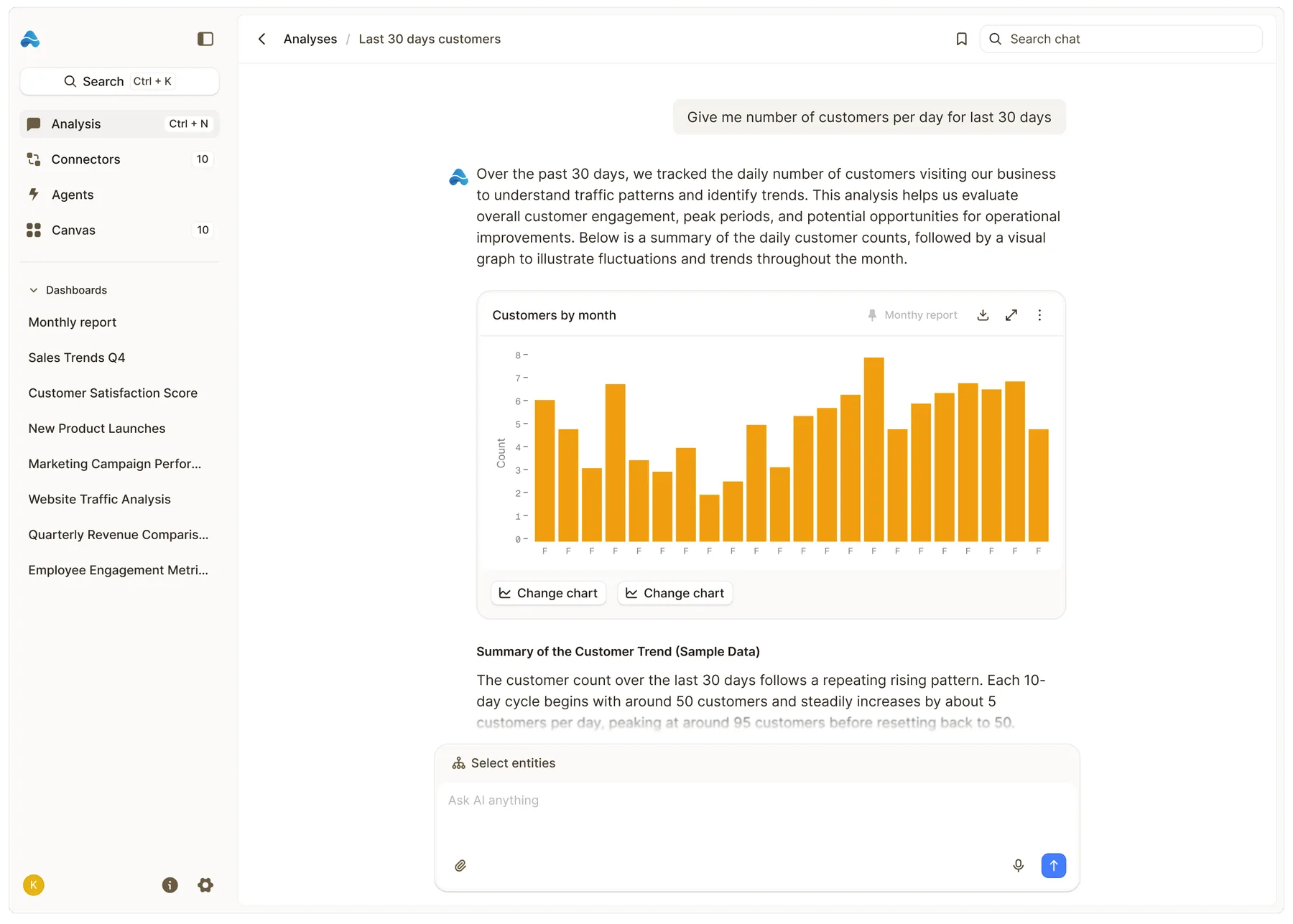
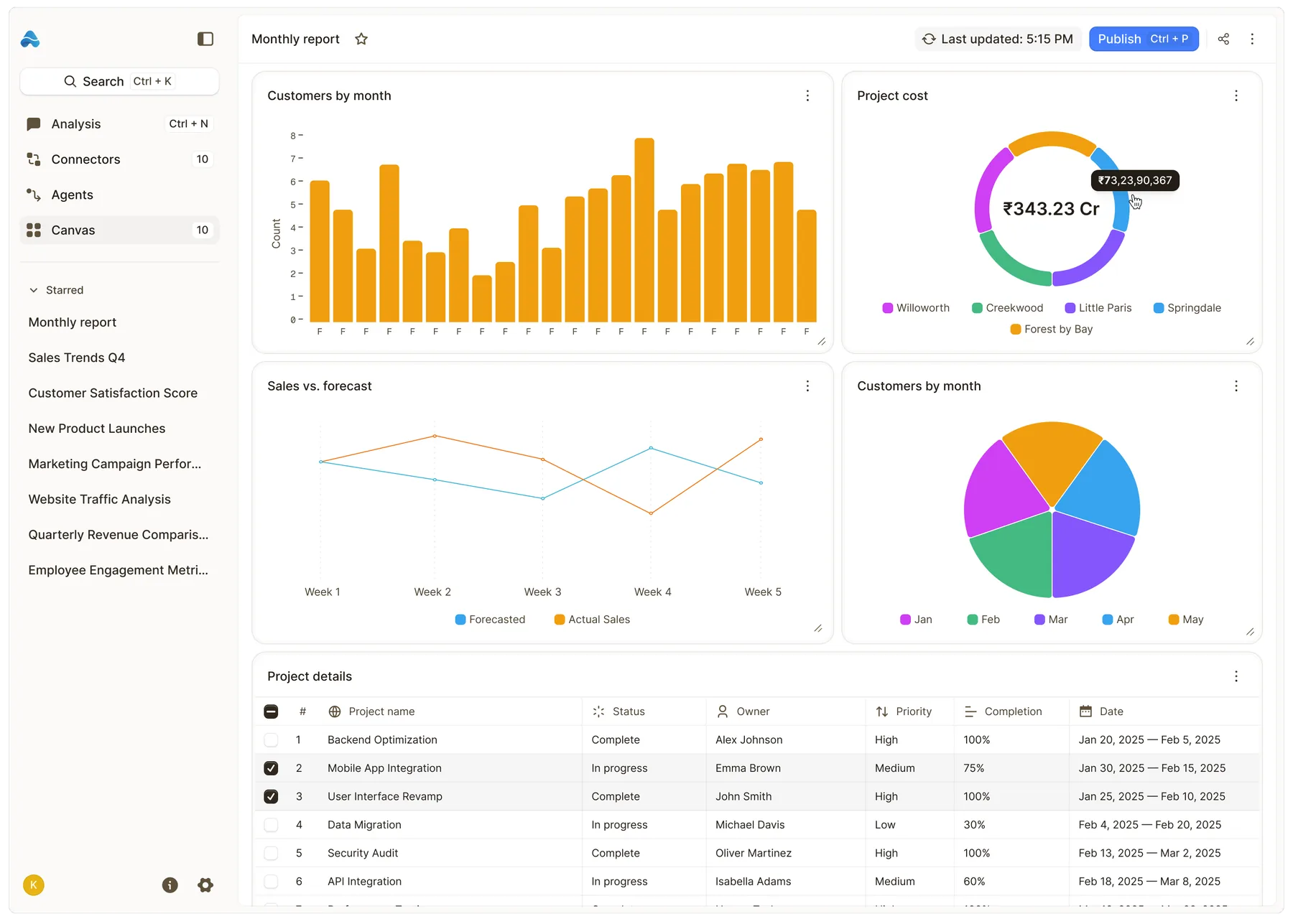
Problem 04
Once the model of the data held up in one place, that same
understanding had to show up consistently in chat, in agent comparisons,
and on a canvas — or the trust built in one screen would leak out of the
next.
One shared source for every number
Charts, comparisons and canvases all pull from the same underlying
entities and confidence scores, so a number means the same thing
wherever it appears.
Outcome
Product design for AI data analytics, built around the idea that
understanding the data is the actual product — not a loading screen in
front of the real one.
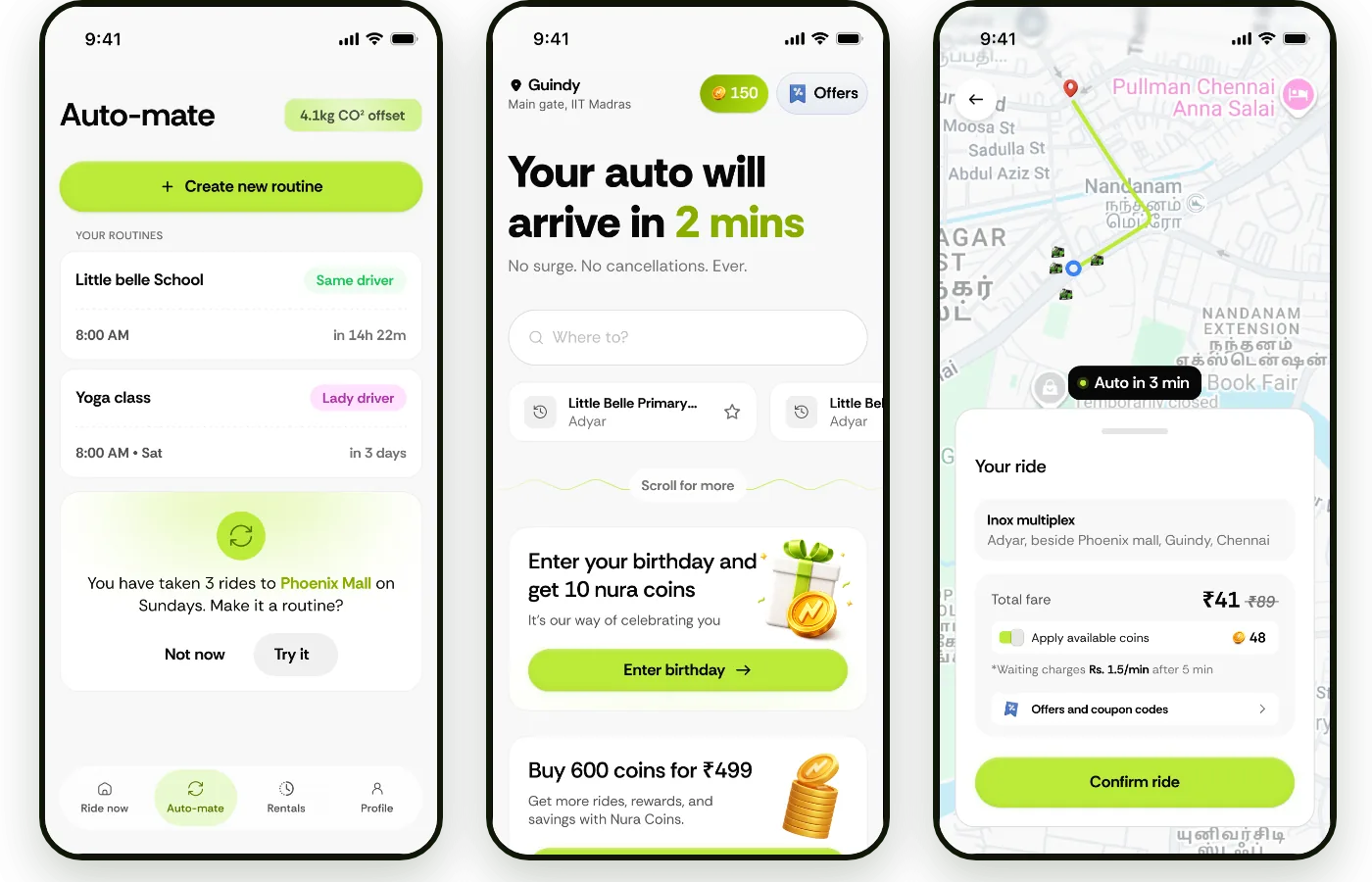
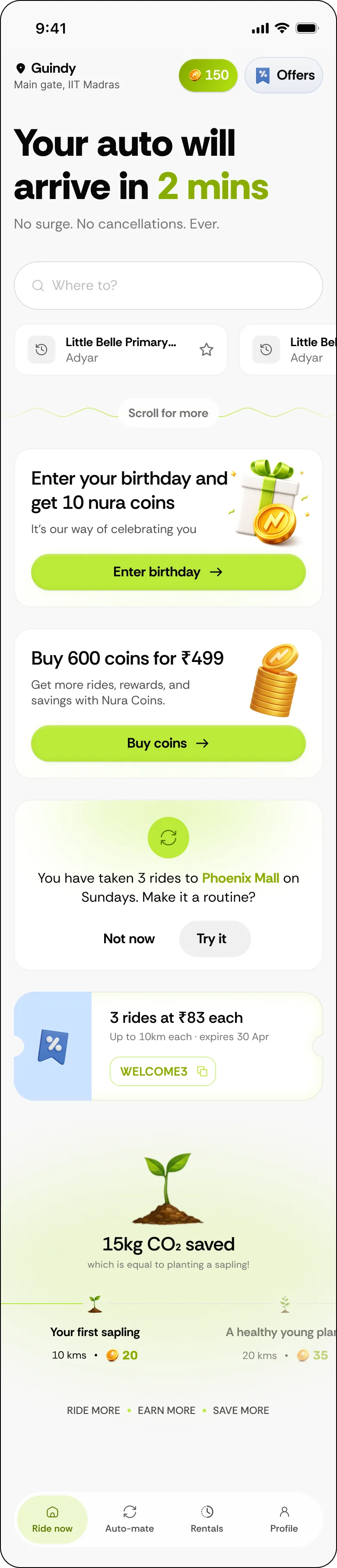
The home screen leads with one thing: how soon an auto can get to you.
Everything else — saved places, coin offers, a nudge to turn a repeated
trip into a routine — sits below the fold.
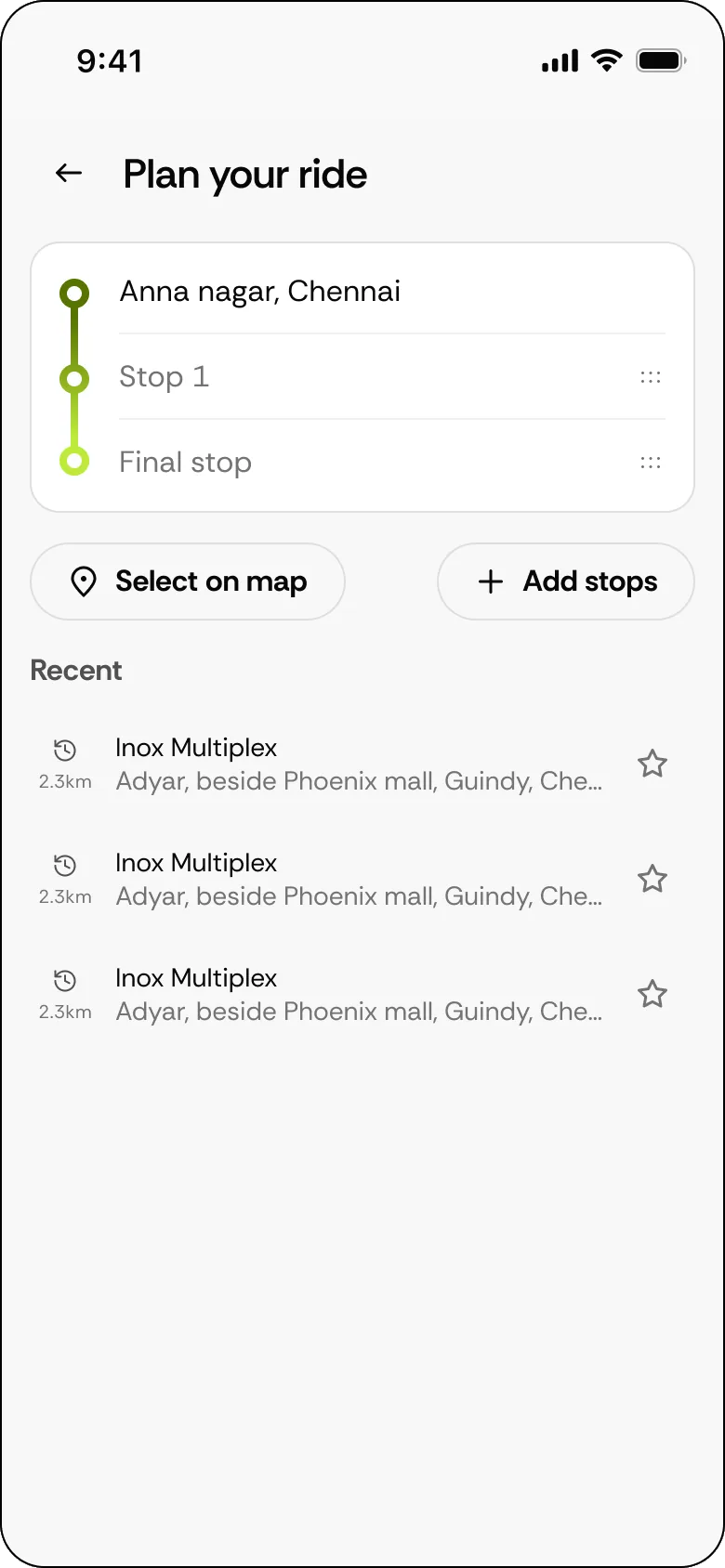
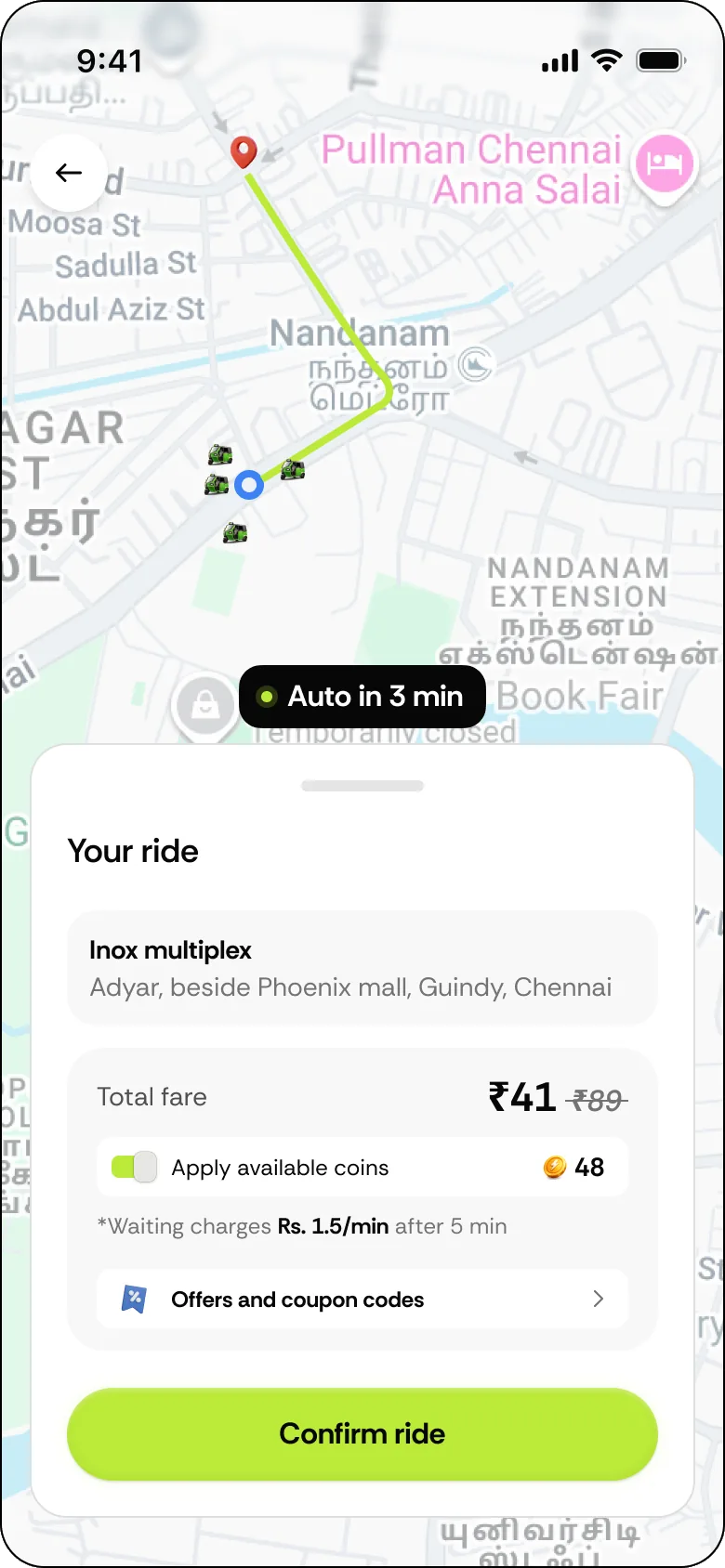
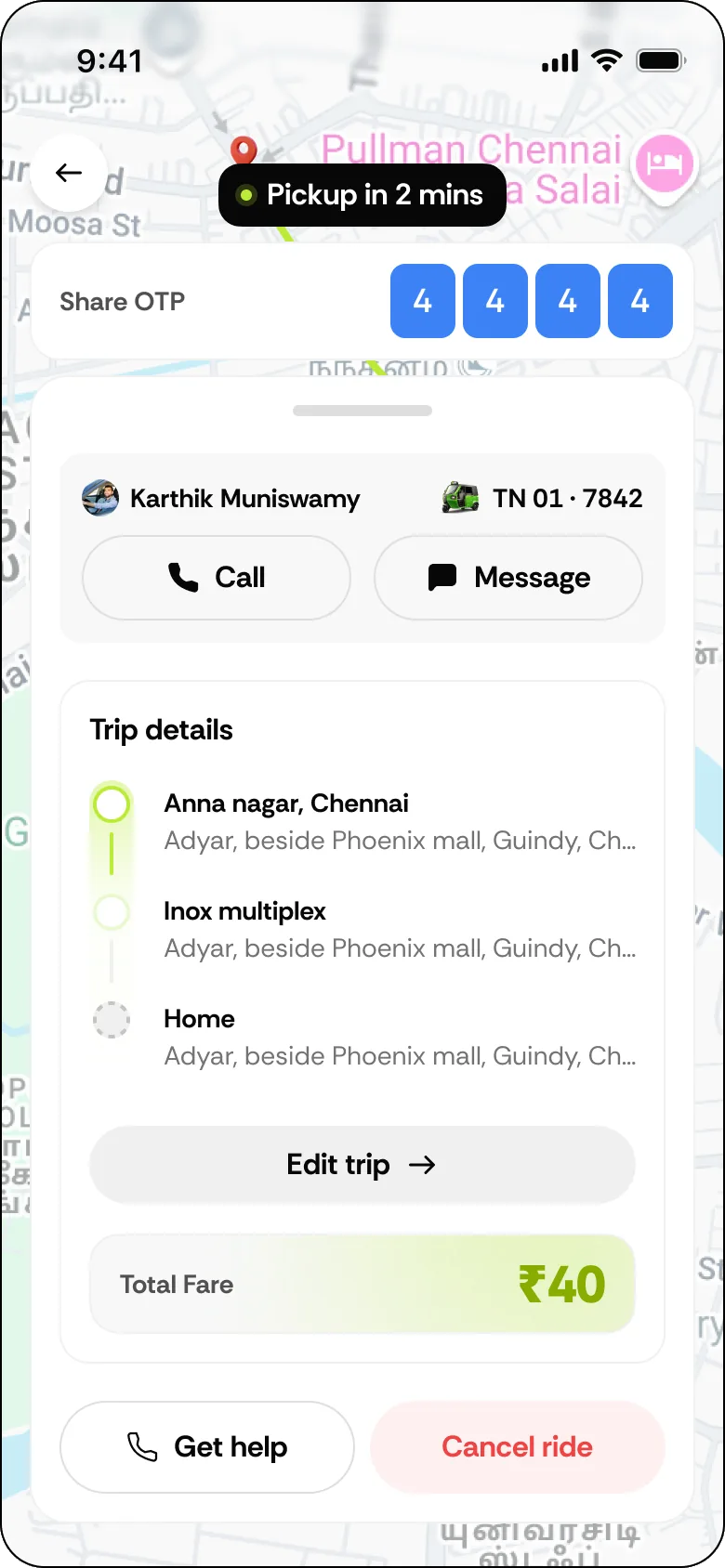
HomePlan your rideConfirm ridePickup
Fare, coins and pickup on one sheet
Confirming a ride shows the fare with coins already applied, waiting
charges spelled out, and offers one tap away. Once a driver is assigned,
the OTP, the driver's name and plate, and every stop on the trip stay on
a single screen — with the fare and a way to edit the trip right there.
Flow 02
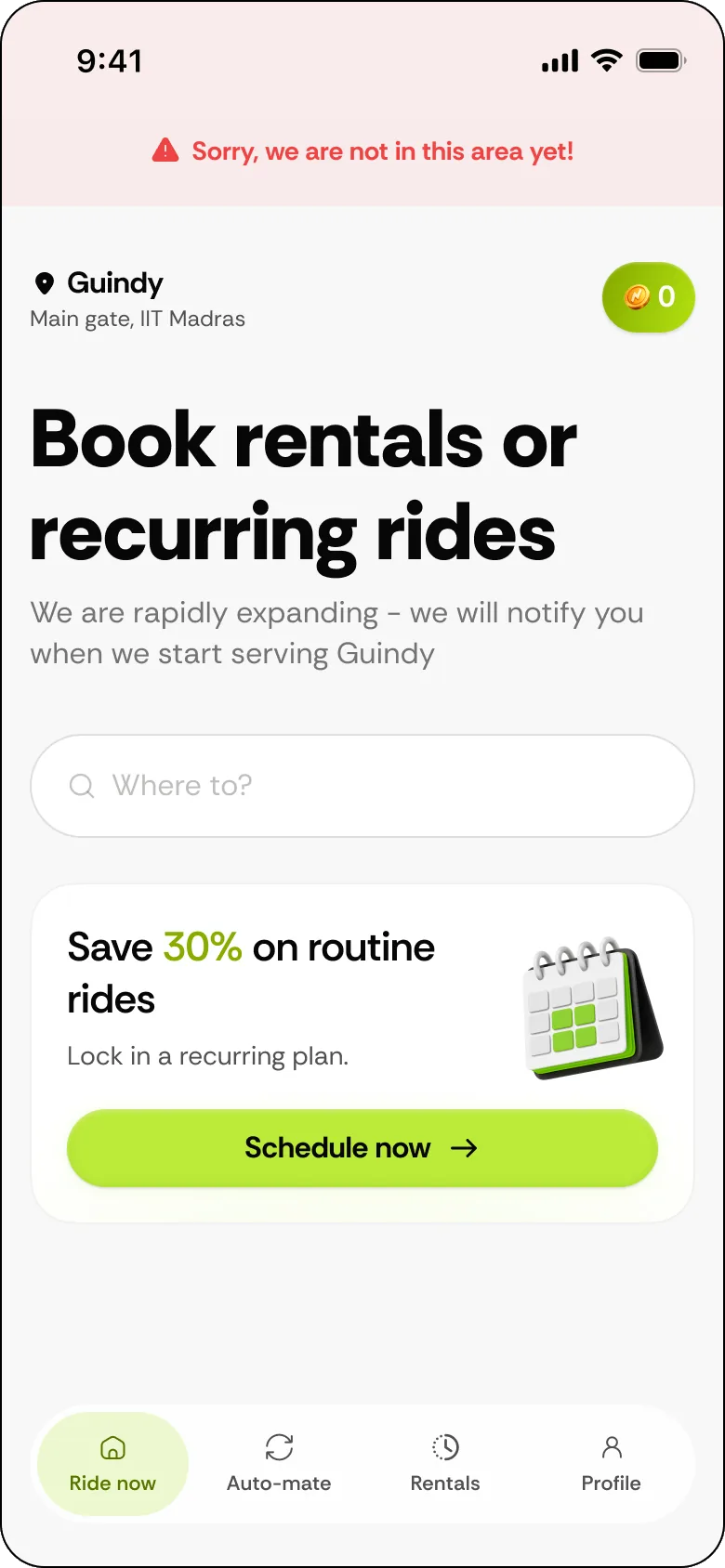
Where instant rides aren't available yet, the home screen changes what
it offers instead of turning into a dead end.
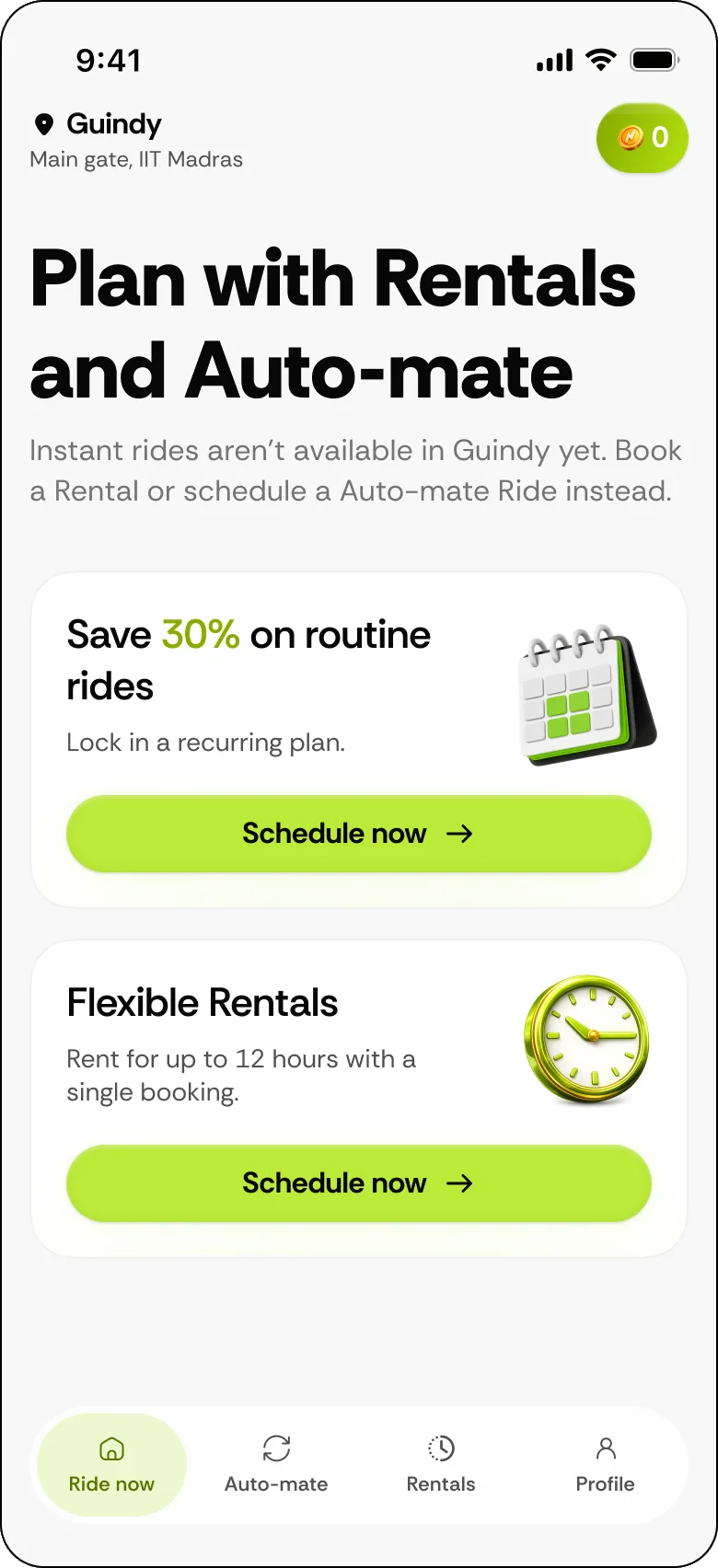
Not in this area yetPlan with Rentals and Auto-mate
Rentals and routines take the lead
The same screen points to the two things that still work there: renting
an auto by the hour, or scheduling a recurring Auto-mate ride.
Flow 03
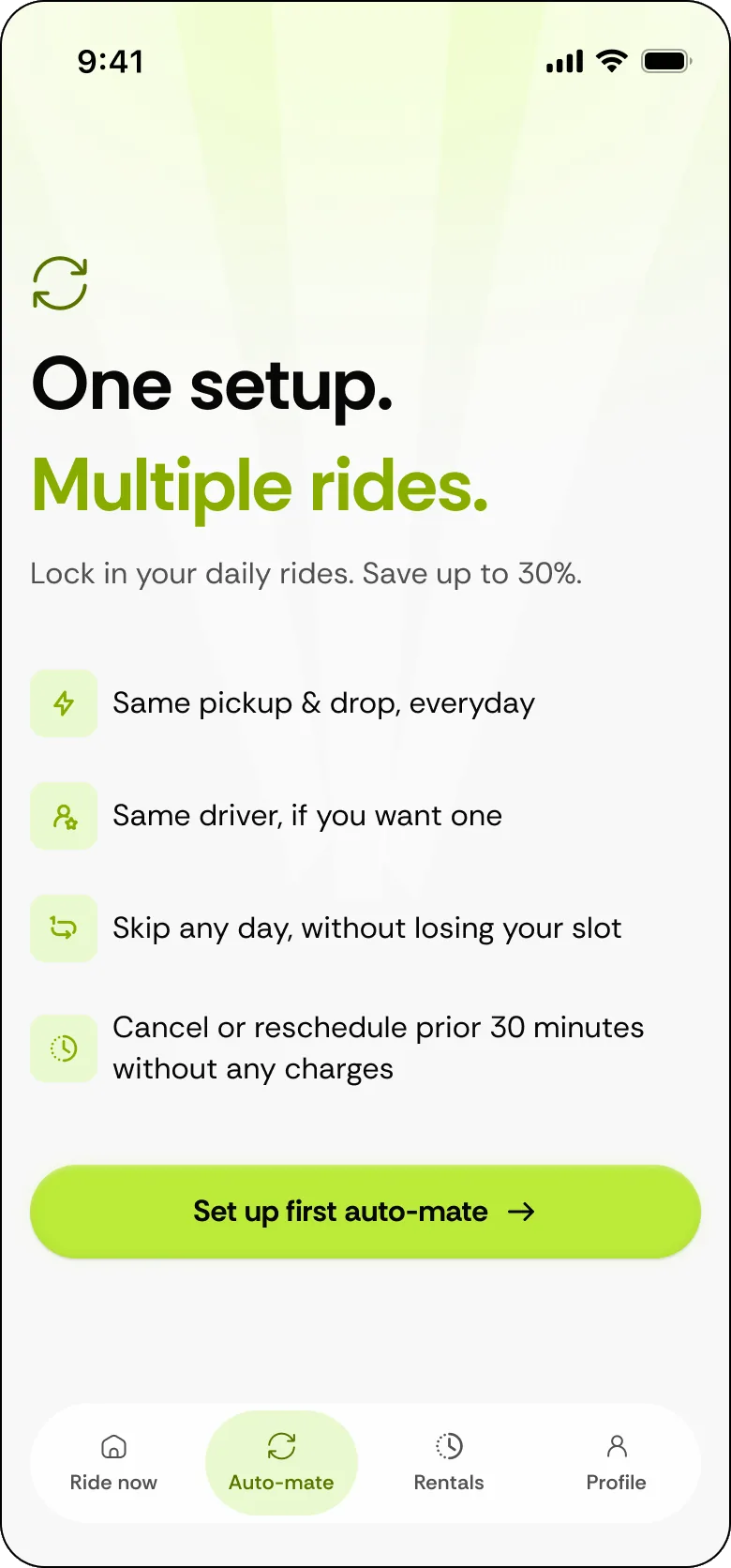
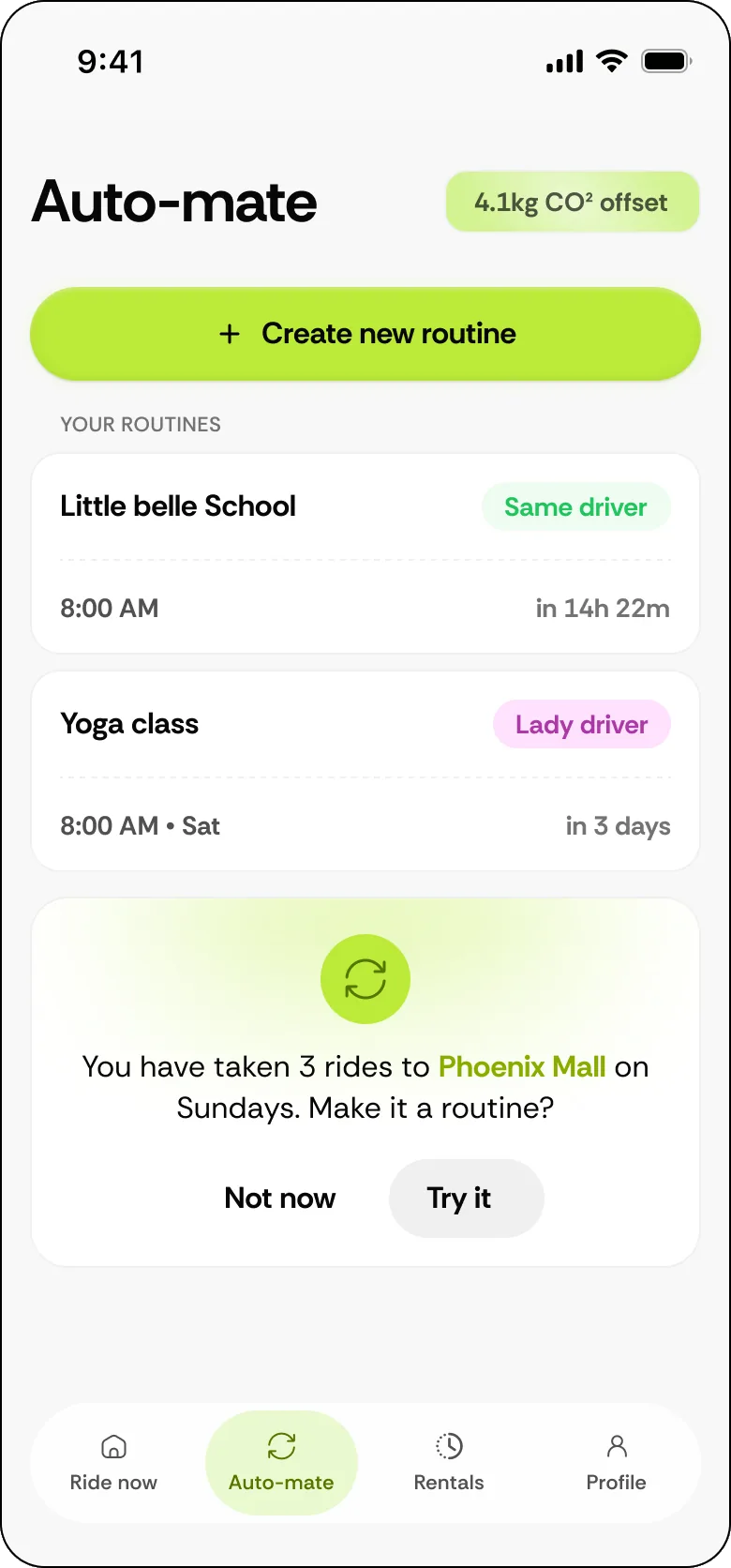
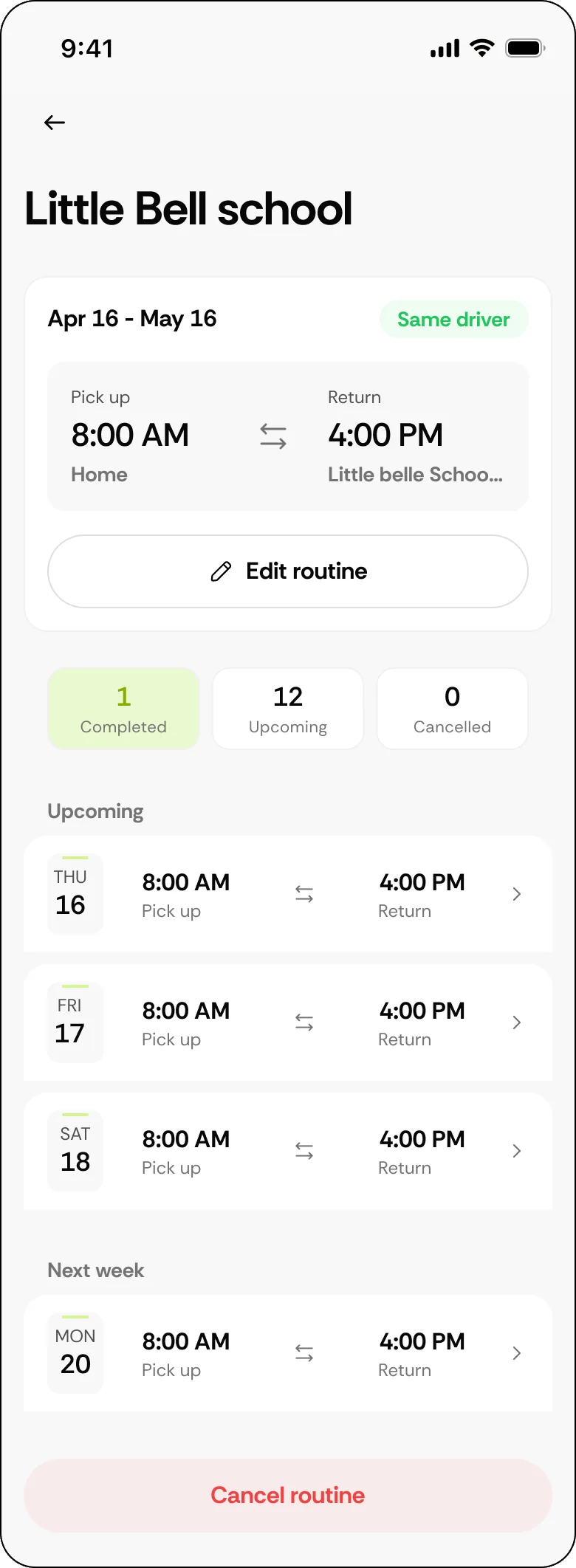
School runs and weekly classes are the same trip over and over. Auto-mate
sets one up once — same pickup and drop, the same driver if you want
one, and any day skippable without losing the slot.
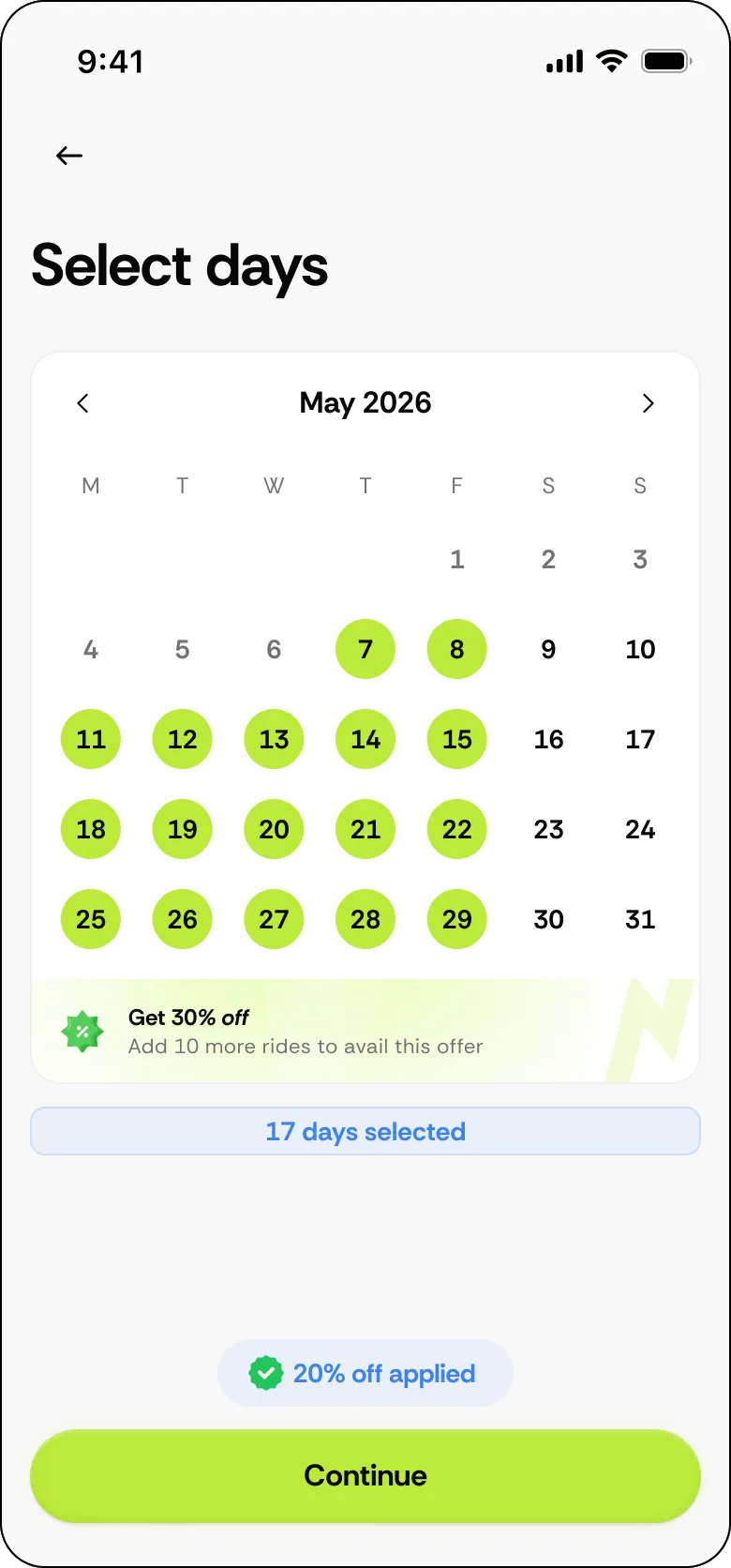
Each routine shows its next pickup and driver preference. A routine's own
page lists every upcoming ride, with completed, upcoming and cancelled
counts. When someone keeps taking the same trip, the app offers to turn
it into a routine.
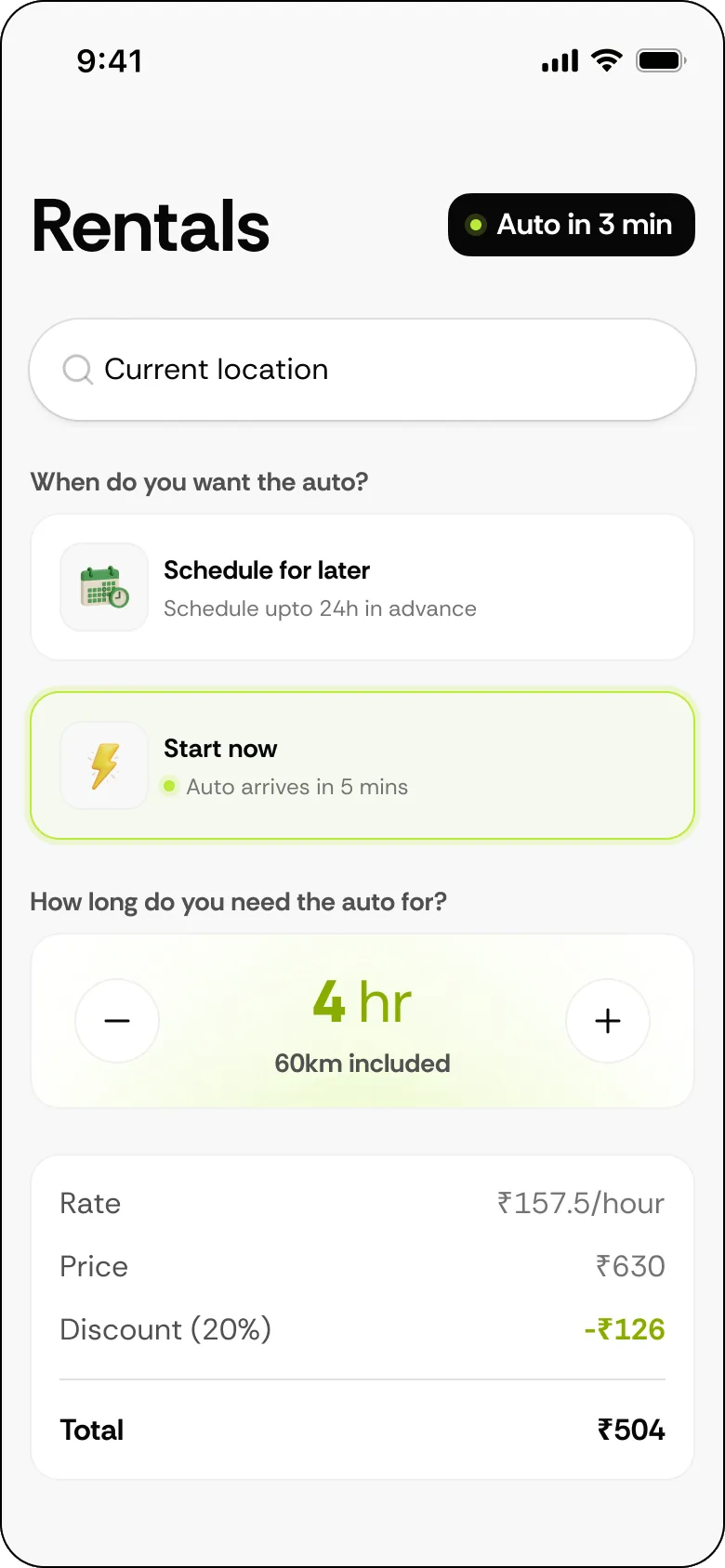
Flow 04
For errands that hop between stops, renting an auto by the hour comes
with the price and kilometres included laid out before you book.
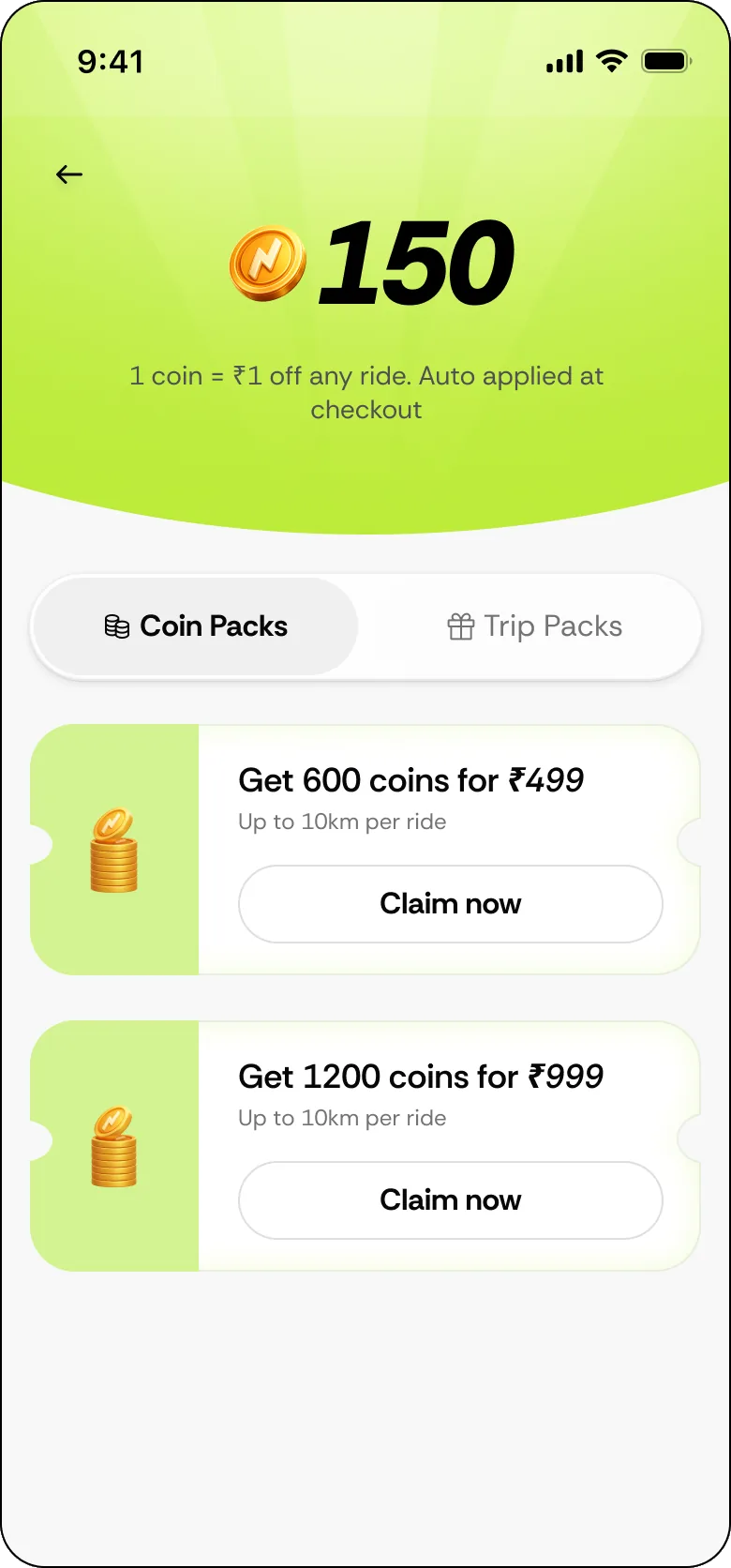
RentalsNura coins
Coins applied automatically
One coin is one rupee off any ride, applied automatically at checkout.
Coin and trip packs live on their own screen.